

When it comes to teeth straightening, two options often come up: Invisalign and traditional braces. Both are excellent choices for achieving a straighter smile, but which one is right for you?
At SG Jain Dental Clinic, we believe in giving our patients all the information they need to make an informed decision. Whether you're looking for a subtle treatment or a time-tested method, understanding the pros and cons of each option will help you make the best choice for your teeth.
In this blog, we’ll break down everything you need to know about Invisalign vs. Braces, helping you figure out which option is best for your lifestyle, comfort, and desired results.
What Are Braces?
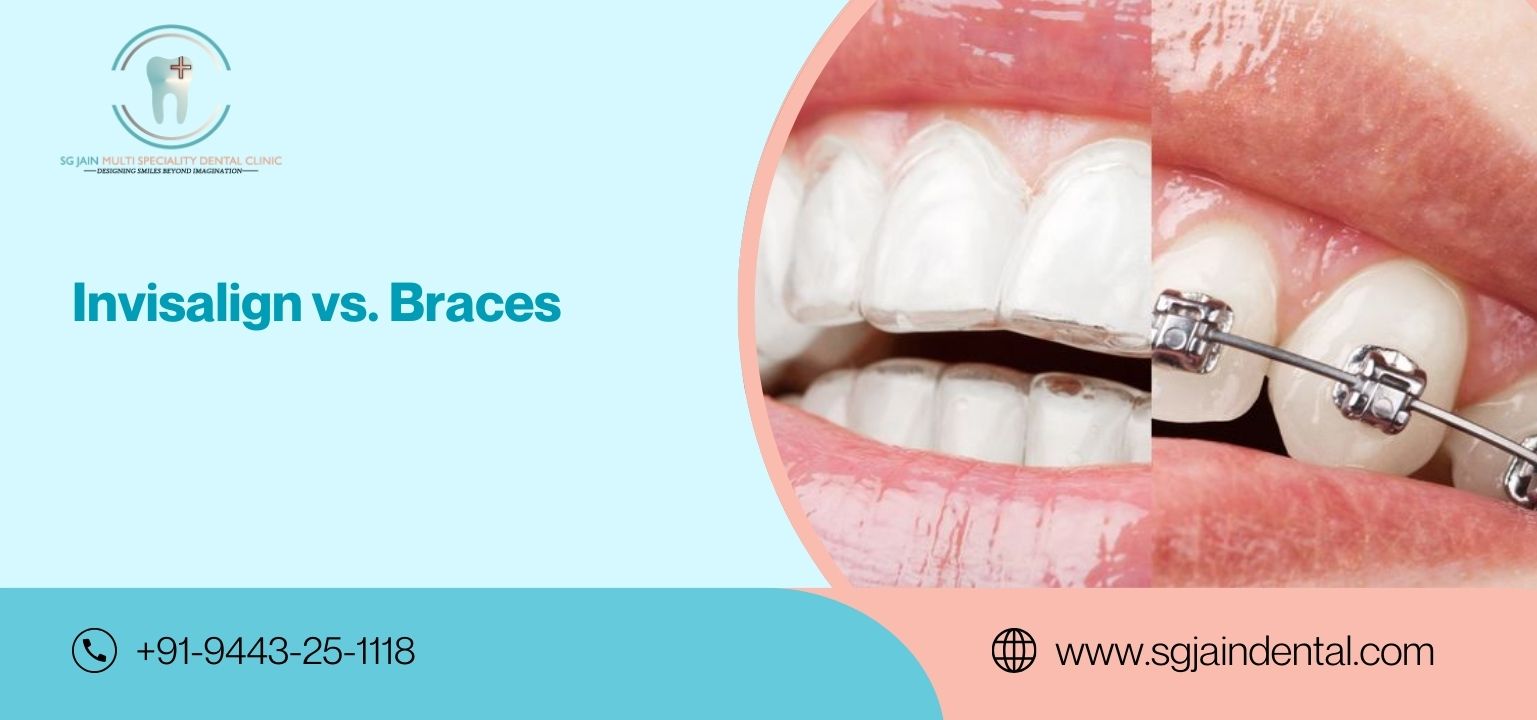
Traditional braces are made of metal brackets that are attached to your teeth and connected by wires. Over time, these wires are tightened to move your teeth into their correct position. Braces are a time-tested solution for straightening teeth, and they're particularly effective for more complex cases.
Pros of Braces:
- Effective for complex cases: Braces can handle a wide variety of dental issues, such as severe crowding, bite misalignment, and large gaps between teeth.
- Constant pressure: With traditional braces, continuous pressure is applied to the teeth, which can lead to faster results.
- Variety of options: Braces are available in metal, ceramic, or lingual options (braces that go behind the teeth).
What is Invisalign?
Invisalign is a modern alternative to traditional braces. Instead of metal brackets and wires, Invisalign uses clear plastic aligners that are custom-made for your teeth. The aligners gradually move your teeth into their proper position, and since they're clear, they’re nearly invisible.
Invisalign is often preferred by adults and teens who want to straighten their teeth without the visibility of traditional braces.
Pros of Invisalign:
- Discreet and invisible: Invisalign aligners are clear and much less noticeable than traditional braces, making them ideal for people who want a subtle solution.
- Removable: You can remove Invisalign aligners while eating, drinking, brushing, and flossing. This gives you more freedom compared to braces.
- Comfortable: Invisalign aligners are made of smooth plastic, reducing the risk of irritation to your gums and mouth that can sometimes occur with metal brackets and wires.
- Fewer office visits: While you'll still need regular check-ups, Invisalign typically requires fewer visits to the dentist compared to braces.
Invisalign vs. Braces: Key Differences to Consider
1. Appearance
- Invisalign: Clear, barely noticeable aligners. Perfect for anyone who feels self-conscious about wearing braces, especially adults.
- Braces: Metal or ceramic brackets and wires that are more visible, though ceramic braces can blend better with the teeth.
2. Comfort
- Invisalign: Smooth plastic aligners that fit comfortably over your teeth. Less chance of irritation to your gums.
- Braces: Metal brackets and wires can cause discomfort, especially after adjustments. Rubber bands can also irritate the inside of the mouth.
3. Convenience
- Invisalign: Removable aligners make it easier to eat, drink, and brush your teeth. No diet restrictions.
- Braces: Braces are permanent fixtures, meaning you’ll need to avoid certain foods and take extra care when brushing and flossing.
4. Effectiveness
- Invisalign: Works well for mild to moderate cases of misalignment, gaps, and bite problems. May not be suitable for complex issues like severe overbite or underbite.
- Braces: Can handle complex cases, including severe crowding, bite problems, and large gaps. Braces can be more effective for more challenging dental issues.
5. Treatment Time
- Invisalign: Treatment time varies based on your needs but generally takes about 12 to 18 months. Compliance with wearing aligners is crucial to achieving faster results.
- Braces: The treatment timeline is often longer than Invisalign, with most treatments lasting between 18 months and 3 years, depending on the severity of the issue.
6. Cost
- Invisalign: Can be more expensive than traditional braces. However, the price varies depending on the complexity of your case and the treatment duration.
- Braces: Generally more affordable than Invisalign, but the cost will vary based on the type of braces you choose (metal, ceramic, or lingual).
Which One Should You Choose?
The choice between Invisalign vs. Braces ultimately depends on your individual needs, lifestyle, and treatment goals.
- Go for Invisalign if you prefer a subtle, comfortable option, and your teeth issues are mild to moderate.
- Opt for braces if you have complex dental issues, such as severe misalignment or a more complex bite problem.
At SG Jain Dental Clinic, we assess your smile thoroughly to recommend the best treatment option tailored to your needs.
Diet & Food Choices: What You Eat Matters More Than You Think
Eating the wrong foods can slow down your teeth straightening progress or even cause damage to your braces or aligners.
- For Invisalign users: You can remove the aligners while eating, but sticky, chewy, or hard foods like candy, gum, or nuts should be avoided. If you forget to clean your teeth and aligners after eating, food particles and bacteria can get trapped, leading to plaque buildup, bad breath, or staining.
- For Braces: You’ll need to avoid crunchy, sticky, or hard foods like popcorn, caramel, or hard candies, as these can break brackets or bend wires. Even eating something as simple as a bagel or an apple may require cutting it into smaller pieces, so you don’t put unnecessary pressure on your braces.
Dental Hygiene: Keeping Your Smile Clean Is Non-Negotiable
No matter what treatment you choose, maintaining excellent oral hygiene is essential for the success of your teeth straightening journey.
- With braces, plaque easily builds up around brackets, making it easier to develop gum disease, cavities, or bad breath. You’ll need to clean around the braces and between the wires carefully with special tools like interdental brushes or floss threaders.
- For Invisalign, brushing and flossing should be done before reinserting your aligners after every meal or drink. If not cleaned properly, aligners can become a breeding ground for bacteria, leading to mouth sores, tooth decay, and other oral issues.
Long-Term Maintenance: Beyond Your Treatment
Both Invisalign and braces lead to amazing results, but the real work begins after your treatment is complete. Without proper retainers, your teeth may shift back to their original positions. Retainers are essential for maintaining your new smile, so be prepared to wear them consistently for a while.
Your lifestyle habits will continue to affect the long-term success of your teeth straightening journey. Whether it’s sticking to a retainer routine or keeping up with regular dental checkups, the work doesn't end once the braces or aligners are removed.
Straighten Your Smile with Confidence
When it comes to achieving a straight, confident smile, both Invisalign and traditional braces have their unique advantages. Choosing between Invisalign braces in RS Puram or braces treatment in RS Puram is a personal decision that depends on your lifestyle, dental needs, and preferences.
If you're still unsure about which treatment is best for you, schedule a consultation at SG Jain Dental Clinic. Our expert team will guide you through the options, helping you make the right choice for your smile.
A straight smile isn’t just about appearance, it’s about feeling confident and happy every time you smile.
Visit:
Name: S.G Jain Multispeciality Dental Clinic and Implant center
Address: Ground Floor, 04, Devanga High School Rd, opp. to canara bank, Sukrawar Pettai, R.S. Puram, Coimbatore, Tamil Nadu 641002
Phone: 0422 450 8118
All Blog
- Difference Between Pulpectomy and Root Canal Treatment
- 5 Common Questions to Ask a Gum Specialist About Gum Disease
- How to Fix Loose Teeth in Adults
- Can You Eat and Drink with Invisalign? Dos and Don’ts for Patients
- Step-By-Step Guide To The Root Canal Procedure
- Invisalign vs. Braces: Which Is Better?
- Dental Implant vs Bridge Treatment: What Works Best for Missing Teeth?